How to fade acne dark spots on African skin
Breakouts may come and go quickly, but the flat dark marks they leave behind can linger for months on melanin-rich skin.
What is the difference between acne dark marks and scars?
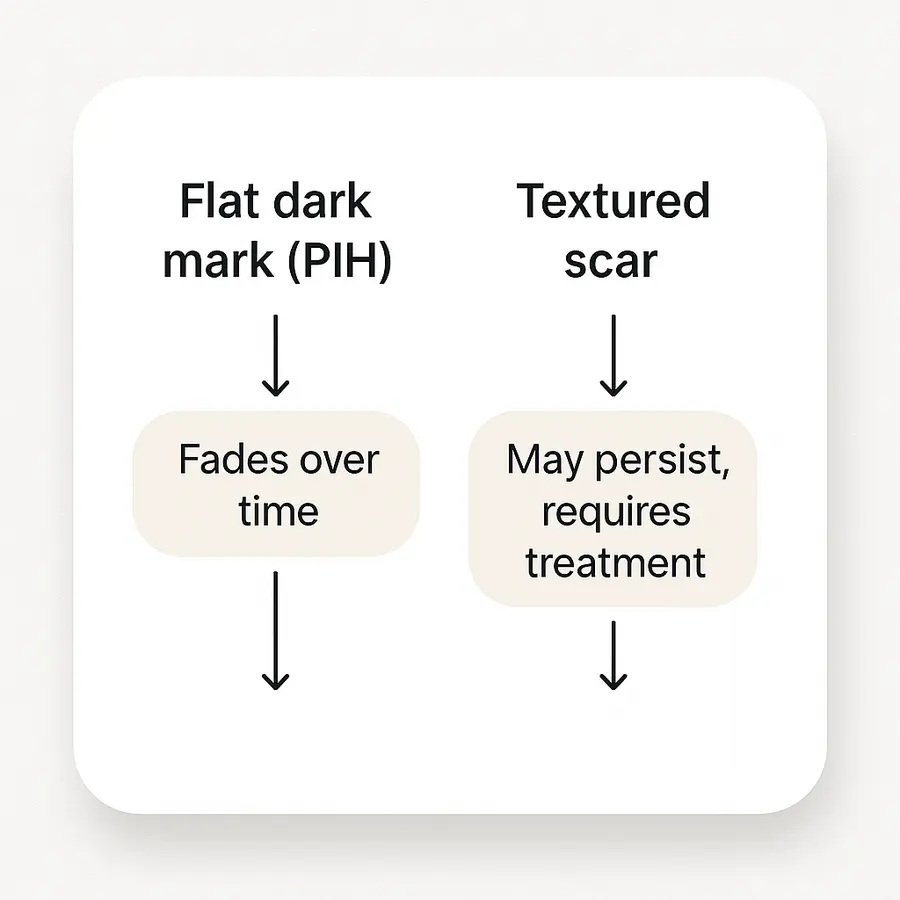
Not all "acne scars" are the same. Most marks after pimples are flat areas of extra pigment, while true scars change the texture of your skin.
- Flat dark marks are smooth to the touch and sit on top of otherwise even skin.
- Textured scars feel raised, bumpy, or indented when you run your fingers over them.
- Flat marks usually respond well to home care; textured scars often need professional treatments.
What is the best routine for acne dark spots on African skin?
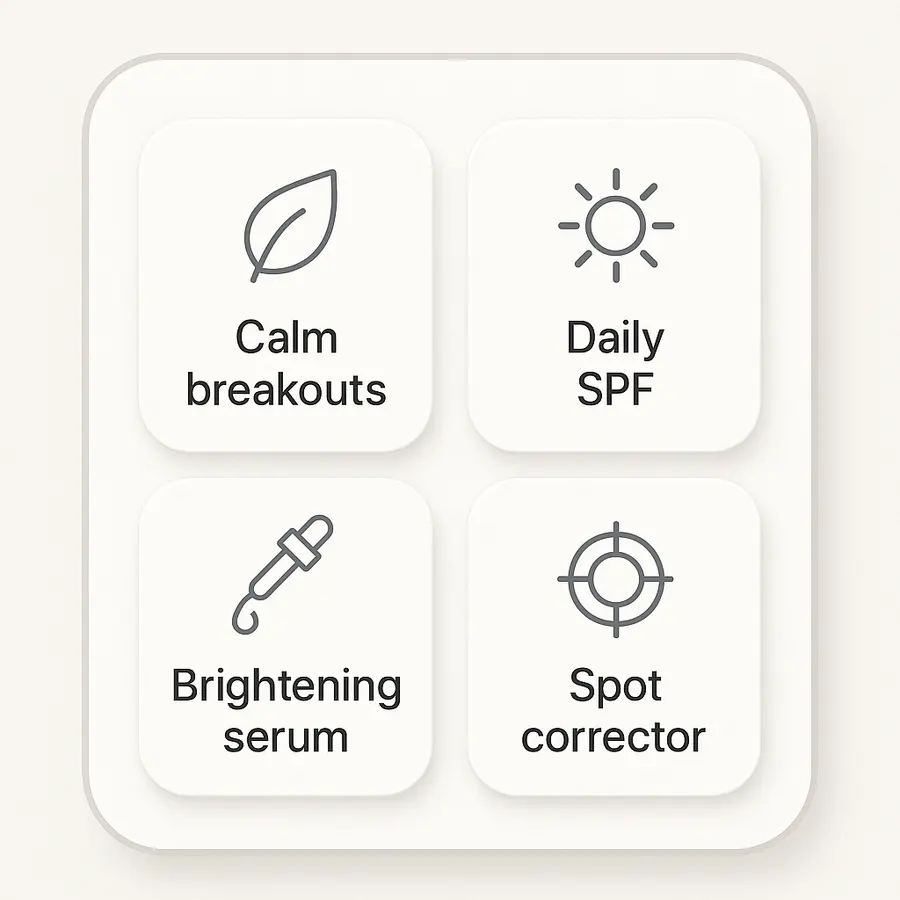
To fade flat dark marks, focus on calming new breakouts, protecting from the sun, and adding gentle brightening products.
- Keep acne under control with non-stripping cleansers and suitable treatments.
- Use broad-spectrum sunscreen daily to stop spots from getting darker.
- Add a brightening serum and, if needed, a targeted corrector on stubborn marks.
Recommended Justine products for acne marks
Avoid picking, squeezing, or scrubbing pimples. On dark skin, this often leads to new marks and can even turn flat spots into raised scars or keloids over time.
Routine steps
- Cleanse gently to avoid stripping the barrier.
- Brighten with a serum; use targeted corrector only on stubborn marks.
- Moisturise to keep skin comfortable.
- Protect every morning with SPF 30-50.
Common mistakes
- Layering too many strong actives on sensitive areas.
- Skipping sunscreen after adding brightening products.
- Swapping products too quickly to “speed up” fading.
Looking for routines? See the morning routine and night routine. For reassurance, read the trust and results page.
Educational only. Not medical advice. Stop using any product that makes your skin very irritated, painful, or swollen, and see a doctor or dermatologist for serious, spreading, or persistent concerns.