
Daily routines for fading dark marks
A clear, repeatable routine is one of the most powerful tools you have for fading dark marks on African and other melanin-rich skin.
Not sure where to start? Identify your dark mark.
Building a routine that works

You do not need a complicated ten-step routine; what matters most is choosing steps that your skin tolerates well and that you can follow most days.
- Keep the basics: cleanse, treat, moisturise, protect.
- Adjust textures for your skin type: lighter gels for oily skin, creams for dry or sensitive skin.
- Add exfoliation once or twice a week if your skin tolerates it.
Example morning and night routines
Use these sample routines as a starting point and adapt them to your lifestyle and budget.
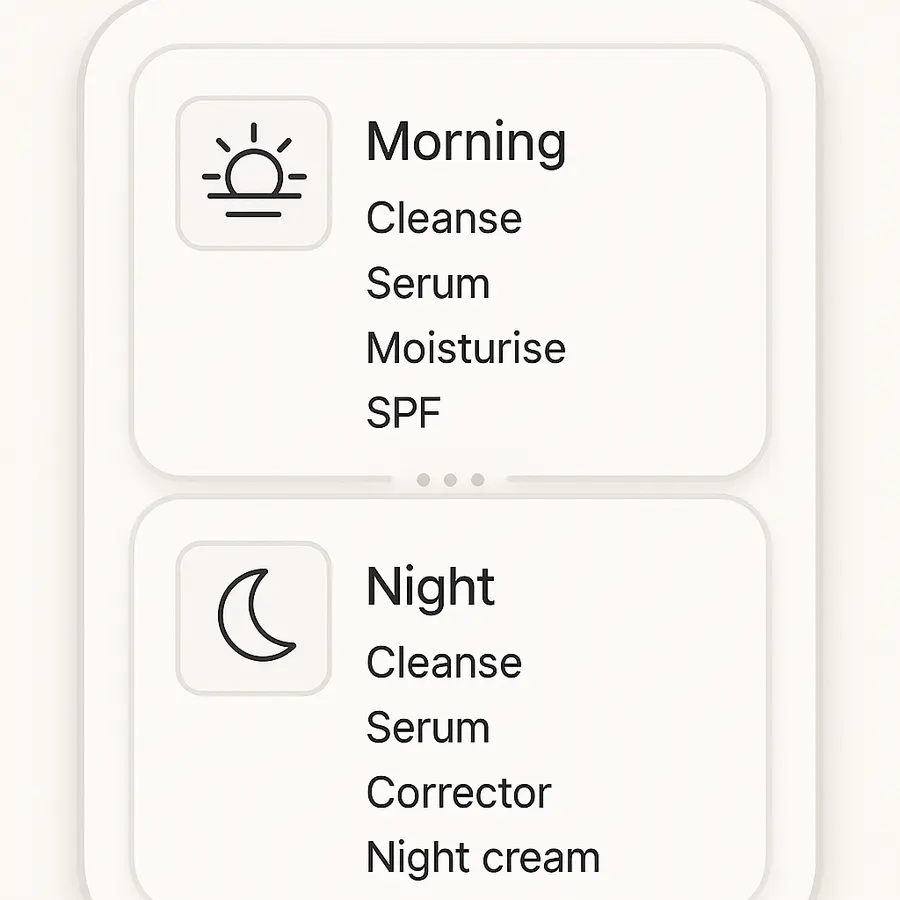
- Morning: gentle cleanser, brightening serum, moisturiser, sunscreen.
- Night: cleanser, brightening serum, optional dark-spot corrector, moisturiser or tissue oil.
- Weekly: gentle exfoliating step on evenings when you are not using other strong treatments.
For a more detailed breakdown of steps, you can follow the morning dark spot routine and night dark spot routine created for African skin in South Africa.
Key Justine products in a routine
A gentle cleanser, brightening serum, targeted corrector, and separate day and night creams mirror the simple routine in the Justine guide.
Take a clear photo of your face every four weeks in similar lighting. Small changes are easier to see over time than day by day, and this can keep you motivated to stay consistent.
Frequently asked questions
How often should I use dark spot treatment products?
Most people do well using brightening serums once or twice a day, while stronger targeted correctors are better kept for night only. If your skin feels sore or tight, pause the strong products and follow a simpler dark mark routine for a few days.
How long will it take to see a change?
Dark marks often start to soften after four to eight weeks of consistent care, sun protection, and a routine that does not irritate your skin. You can read more in the dark spot fade timeline guide.
Can I get help planning my routine?
Yes. If you prefer a tailored plan, you can fill in a few questions on the personalised dark spot treatment routine page and receive suggestions from a Justine consultant in South Africa.
Key takeaways
- These routines are created for African and other melanin-rich skin in South Africa that wants to fade dark spots and dark marks slowly without damaging the barrier.
- The core routine stays the same: cleanse, treat with a brightening serum or corrector, moisturise, and protect with daily sunscreen.
- See a healthcare professional if your skin becomes very painful, swollen, or develops new patches of colour that do not match your usual dark marks.
Educational only. Not medical advice. Stop using any product that makes your skin very irritated, painful, or swollen, and see a doctor or dermatologist for serious, spreading, or persistent concerns.
Routine steps
- Cleanse gently to avoid stripping the barrier.
- Brighten with a serum; use targeted corrector only on stubborn marks.
- Moisturise to keep skin comfortable.
- Protect every morning with SPF 30-50.
Common mistakes
- Layering too many strong actives on sensitive areas.
- Skipping sunscreen after adding brightening products.
- Swapping products too quickly to “speed up” fading.