
How to manage hormonal pigmentation on African skin
Hormonal shifts from pregnancy, birth control, or health conditions can cause patches of darker skin, especially on the cheeks, forehead, and upper lip.
How do hormones cause dark spots and melasma?
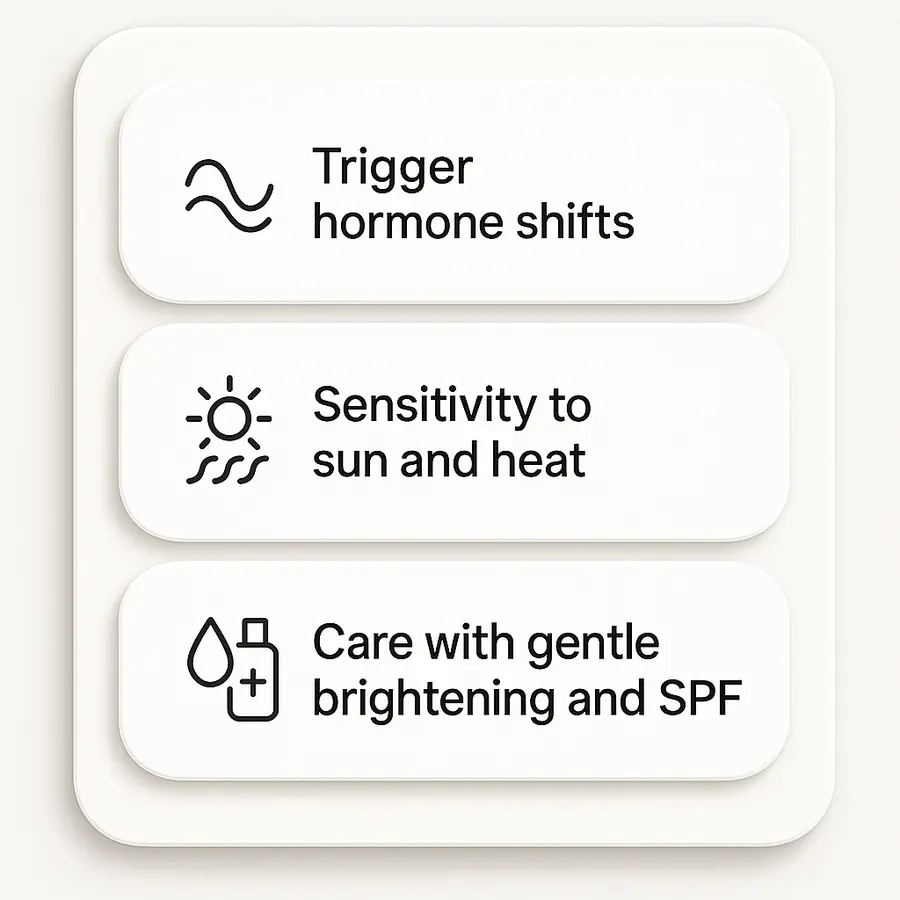
Changes in hormones can make pigment cells more active, leading to melasma or other forms of hormonal pigmentation that are often slow to fade.
- Patches usually look symmetrical on the face and may darken with sun exposure.
- Even mild irritation or heat can trigger flares when skin is sensitised.
- Full fading is not always possible, but marks often soften with careful treatment.
What routine can I use for hormonal pigmentation?
Because hormonal pigmentation is sensitive to sunlight and irritation, gentle routines and strict sun protection are essential.
- Use fragrance-free, non-stripping cleansers and moisturisers.
- Apply a brightening serum or even-tone product consistently.
- Wear broad-spectrum SPF every day, reapplying when you are outdoors.
Recommended Justine products for hormonal marks
Always speak to your doctor before changing medication or contraceptives because of pigmentation. Skincare works best alongside medical advice when hormones play a big role.
Educational only. Not medical advice. Stop using any product that makes your skin very irritated, painful, or swollen, and see a doctor or dermatologist for serious, spreading, or persistent concerns.
Routine steps
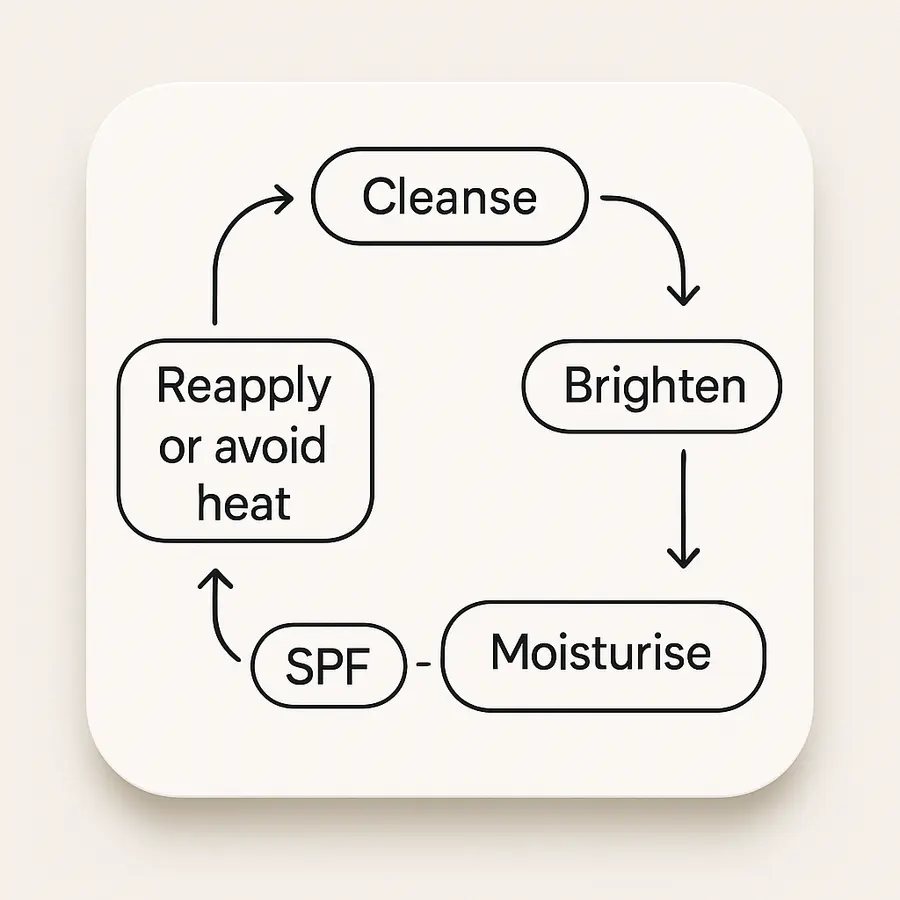
- Cleanse gently to avoid stripping the barrier.
- Brighten with a serum; use targeted corrector only on stubborn marks.
- Moisturise to keep skin comfortable.
- Protect every morning with SPF 30-50.
Common mistakes
- Layering too many strong actives on sensitive areas.
- Skipping sunscreen after adding brightening products.
- Swapping products too quickly to “speed up” fading.
Looking for routines? See the morning routine and night routine. For reassurance, read the trust and results page.