
What causes dark marks on African skin?
Dark marks on melanin-rich skin usually appear after inflammation or injury, not out of nowhere. Understanding the triggers helps you prevent new spots while you fade the old ones.
What are the most common triggers of dark marks?
Dark marks often show up in the same places you see acne, shaving bumps, or areas of friction, because your skin makes extra pigment to protect itself after irritation.
- Acne breakouts that leave flat brown or black marks once they heal.
- Shaving bumps and ingrown hairs, especially on the jawline and neck.
- Rashes, insect bites, or scratch marks that leave darker areas behind.
Why does melanin-rich skin mark so easily?
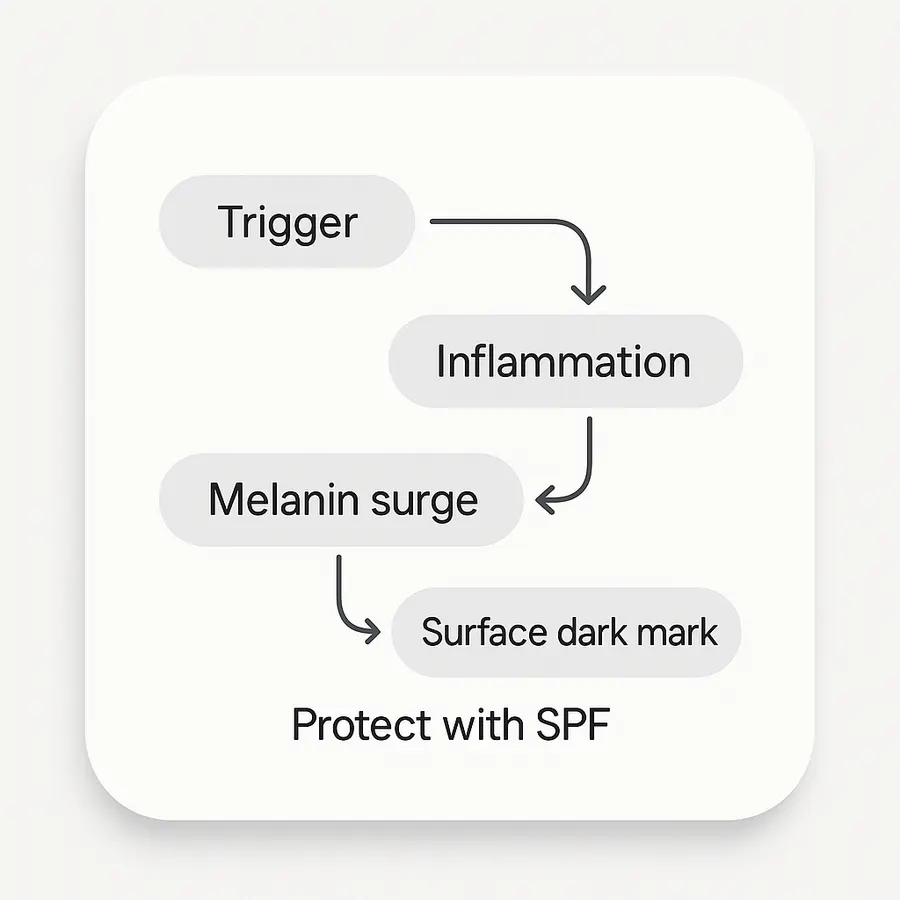
Melanin is protective, but in darker skin tones, the pigment response is stronger, so even mild irritation can leave behind noticeable marks.
- Inflammation signals pigment cells to make more melanin.
- This extra pigment can cluster in one area, forming a dark mark.
- Without sun protection, the mark often deepens instead of fading.
Products that support repair
No single cream fades every mark quickly. Pairing gentle routine products with daily sunscreen and good shaving or acne-care habits gives the best chance of steady improvement.
Educational only. Not medical advice. Stop using any product that makes your skin very irritated, painful, or swollen, and see a doctor or dermatologist for serious, spreading, or persistent concerns.
Routine steps
- Cleanse gently to avoid stripping the barrier.
- Brighten with a serum; use targeted corrector only on stubborn marks.
- Moisturise to keep skin comfortable.
- Protect every morning with SPF 30-50.
Common mistakes
- Layering too many strong actives on sensitive areas.
- Skipping sunscreen after adding brightening products.
- Swapping products too quickly to “speed up” fading.
Looking for routines? See the morning routine and night routine. For reassurance, read the trust and results page.